
California Residence or Domicile
The applicant resides or is domiciled in California.
San Francisco pre-settlement funding provides plaintiffs with $500 to $2,000,000 from the anticipated proceeds of a pending civil claim before the claim resolves.
Mayfair Legal Funding structures the transaction as a non-recourse purchase of a contingent interest in potential claim proceeds. The plaintiff’s legal recovery serves as the repayment source rather than wages, bank accounts, a home, a vehicle, or unrelated personal property.
Mayfair Legal Funding receives repayment after a successful settlement, judgment, award, or verdict. An unsuccessful funded claim produces no repayment obligation.
The terms “lawsuit loan,” “settlement loan,” and “pre-settlement loan” commonly describe this form of funding, although Mayfair Legal Funding provides a non-recourse cash advance rather than conventional consumer credit.
A San Francisco plaintiff applies online or calls Mayfair Legal Funding at (888) 357-1338.
The application process follows 4 actions:
Apply for San Francisco pre-settlement funding or call (888) 357-1338.
A San Francisco plaintiff becomes eligible for legal funding when the claim satisfies California residency, attorney representation, liability, damages, and expected-recovery conditions.
California law also requires the retained contingency-fee attorney to participate in the acknowledgement and repayment process.
Listed below are the 8 eligibility conditions.
Mayfair Legal Funding provides San Francisco plaintiffs with non-recourse repayment, case-based approval, transparent rates, written terms, attorney coordination, and fast cash distribution.
Mayfair Legal Funding provides:
Mayfair provides pre-settlement funding in 46 states. Explore your state to learn about local funding laws, typical timelines, and the types of cases we fund in your area.
Please note: due to state laws and factors beyond our control, we are not able to provide our services in Arkansas, Connecticut, West Virginia, and Vermont currently in 2026. This may change and this is a living page that is updated as-needed.
Mayfair Legal Funding requires active attorney representation because the retained attorney supplies case information, completes the required acknowledgement, and distributes repayment from a successful recovery.
The attorney provides information used during underwriting and verifies the attorney-client relationship associated with the civil claim.
The attorney also handles repayment after the case resolves by distributing the contracted amount through a client trust account or settlement fund.
California law restricts disclosure of privileged information without the plaintiff’s written consent and places separate restrictions on prohibited financial interests involving the attorney and funding company.

No, Mayfair Legal Funding bases San Francisco funding approval on the legal claim and expected recovery rather than the plaintiff’s personal credit profile.
The application does not require these 9 financial prerequisites:

The claim's merits, evidence, expected value, and probability of financial recovery drive the funding review.
Mayfair Legal Funding calculates the San Francisco funding amount from the expected claim recovery and the proceeds projected to remain after case obligations.
Available advances range from $500 to $2,000,000, subject to underwriting.
Mayfair Legal Funding examines these 19 case valuation factors:
A large gross case value does not equal the amount available for funding. Attorney fees, healthcare liens, litigation expenses, previous advances, comparative-fault reductions, and other obligations reduce the plaintiff’s expected net proceeds.
Mayfair Legal Funding limits the advance to an amount supported by those remaining proceeds.
No fixed percentage applies to every San Francisco claim because Mayfair Legal Funding evaluates the expected net recovery and individual case risk before determining the available advance.
The funding amount reflects the anticipated settlement value together with liability, damages, attorney fees, healthcare liens, previous funding, expected case duration, and underwriting risk.
California law requires contracted repayment to follow predetermined time intervals rather than a percentage calculated from the plaintiff’s final recovery.
Attorney response time, claim complexity, and document availability control much of the San Francisco funding timeline.
Mayfair Legal Funding completes many initial reviews within 24 hours after receiving enough information to evaluate the claim. Approved funds are distributed after attorney verification and completion of the required contract.
Missing police reports, medical records, insurance information, lien balances, prior funding agreements, or settlement documents can delay underwriting.
Many initial reviews are completed within 24 hours after sufficient claim information is received.
Review and funding times vary by claim. Attorney responsiveness, document availability, case complexity, and completion of the required agreement process can affect the timeline.
Mayfair Legal Funding reviews San Francisco civil claims with attorney representation, documented liability, compensable damages, and a probable source of recovery.
Explore common San Francisco claim categories below.
Car, truck, bus, motorcycle, bicycle, pedestrian, rideshare, delivery-vehicle, drunk-driving, distracted-driving, and freeway collisions.

Slip-and-fall accidents, negligent security, dog bites, stairway falls, elevator accidents, retail injuries, and unsafe-property claims.

Scaffold falls, ladder falls, electrocutions, explosions, trench collapses, crane accidents, forklift injuries, and defective equipment.

Workplace injuries, wrongful termination, retaliation, discrimination, harassment, wage theft, unpaid overtime, and whistleblower claims.

Surgical errors, diagnostic errors, medication mistakes, birth injuries, hospital negligence, and improper treatment.

Defective drugs, medical devices, vehicle parts, machinery, consumer products, and failure-to-warn claims.

Police brutality, excessive force, wrongful arrest, unlawful detention, wrongful imprisonment, and constitutional-rights violations.

Traumatic brain injuries, spinal injuries, paralysis, amputations, severe burns, disability, and long-term care claims.

Fatal vehicle crashes, workplace deaths, malpractice deaths, defective-product deaths, and other negligence-related deaths.

Institutional, school, workplace, clergy, and other civil sexual-abuse claims.

Defective pharmaceuticals, toxic exposure, defective medical devices, and coordinated product-liability actions.

Contract disputes, business torts, partnership disputes, intellectual-property claims, and other commercial litigation.

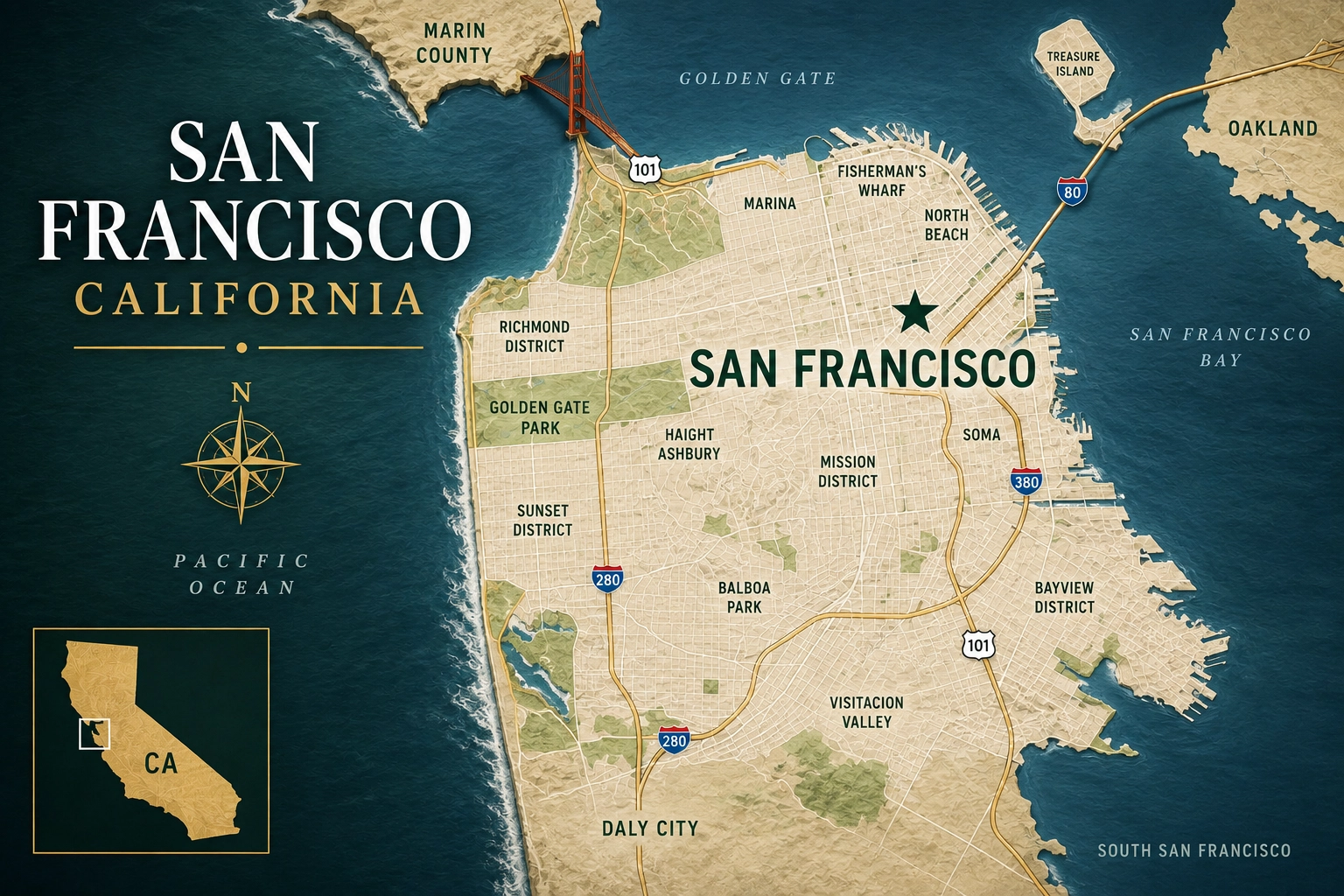
San Francisco claims may also involve accidents occurring on US Route 101, Interstate 280, Interstate 80, State Route 1, and other Bay Area roads.
A San Francisco plaintiff should review the repayment structure and projected settlement impact before signing a pre-settlement funding agreement.
The non-recourse structure removes repayment after an unsuccessful funded claim. A successful recovery produces a different result because the funded amount and contracted charges are deducted before the plaintiff receives the remaining proceeds.
Listed below are the 8 funding terms the plaintiff and attorney must review:
California law requires the agreement to disclose the funded amount, itemized charges, maximum repayment amount, and repayment schedule. Charge accrual is also limited to 36 months.
A San Francisco plaintiff owes Mayfair Legal Funding nothing when the funded claim ends without a settlement, judgment, award, verdict, or other financial recovery.
The claim proceeds serve as the contracted repayment source. No successful recovery means no proceeds exist for repayment under the non-recourse agreement.
Fraud, material misrepresentation, or material breach of the signed agreement remains a separate contractual matter.
No, San Francisco pre-settlement funding creates no scheduled monthly payment obligation during the pending claim.
The plaintiff does not repay Mayfair Legal Funding from wages, savings, benefits, or monthly income.
After a successful recovery, the retained attorney deducts legal fees, litigation expenses, healthcare liens, legal funding repayment, and other case obligations before releasing the remaining proceeds to the plaintiff.
San Francisco plaintiffs use pre-settlement funds to cover personal and household expenses during the period between filing or pursuing a claim and receiving the eventual recovery.
Listed below are 23 common uses of San Francisco legal funding.
The plaintiff controls the distributed cash. California consumer legal funding rules restrict the funding company from using transaction funds to pay attorney fees, filing fees, or court costs.
Call Mayfair Legal Funding at (888) 357-1338 for a free San Francisco funding review.
Yes, San Francisco plaintiffs use approved legal funding for rent, mortgage payments, utilities, moving expenses, and other housing costs during litigation.
San Francisco legal funding does not reduce rent or change a lease obligation. The cash advance gives the plaintiff access to part of the expected case proceeds before resolution.
San Francisco maintains separate housing and renter-assistance resources for residents facing rent or housing problems. Those programs operate separately from legal funding.
Yes, Mayfair Legal Funding reviews additional funding requests when updated case value and remaining net proceeds support another advance.
Mayfair Legal Funding evaluates these additional requests separately. The review examines the 13 items in the list below.
An earlier approval does not guarantee another advance. Existing funding reduces the proceeds available to support another transaction.
California law addresses prior assignments and restricts later funding interests when a funding company knows or reasonably ought to know about an existing assignment.
Mayfair Legal Funding’s rates range from 2.5% to 5% per month in most cases, with the signed funding agreement specifying the exact charges.
Mayfair Legal Funding bases pricing on case merit, complexity, expected duration, probable recovery, requested amount, and funding risk. Mayfair’s contingency-based funding structure contains no upfront cost. Plaintiffs can review Mayfair Legal Funding rates before accepting an agreement.
Yes, non-recourse consumer legal funding is legal in San Francisco when the agreement follows California law.
The California Consumer Legal Funding Act appears in California Business and Professions Code §§6250–6256. The law became effective on January 1, 2026. The Act governs funding agreements, disclosures, attorney involvement, charges, cancellation rights, settlement control, prior assignments, referrals, privileged information, and consumer remedies.
California law classifies consumer legal funding as a non-recourse transaction involving the purchase of a contingent right to potential civil-claim proceeds.
California Business and Professions Code §§6250–6256 establish the primary rules for consumer legal funding transactions involving California residents.
The table below shows the California legal funding requirements.
Every consumer legal funding transaction requires a written contract.
The agreement must use language an average consumer understands.
Every term must appear when the agreement is first presented.
Negotiations in another language require copies in English and that language.
The consumer returns the funded amount within 5 business days and cancels without penalty.
The consumer acknowledges receipt of the agreement pages.
The first page identifies one-time charges.
The highest contracted repayment amount appears on the first page.
The agreement states the applicable payment intervals.
The agreement explains how charges accrue.
Charges stop accruing 36 months after the funding date.
The contingency-fee attorney reviews and acknowledges the agreement.
The attorney distributes proceeds through a client trust account or settlement fund.
The agreement cannot penalize early repayment.
The repayment amount cannot equal a percentage of the final recovery.
The funding company cannot direct the claim or settlement.
The funding company cannot pay an attorney or law firm for a referral.
The attorney requires written client consent before sharing privileged information.
Statutory violations support contract termination and other legal remedies.
San Francisco legal funding depends on claim strength and successful recovery; a traditional loan depends on personal credit and remains payable regardless of the lawsuit result.
The table below shows the differences.
Mayfair describes legal funding as non-recourse funding based on the expected case recovery rather than conventional personal credit.
Pre-settlement funding is worth the contracted cost when immediate financial obligations create greater harm than the reduction in the plaintiff’s final recovery.
The plaintiff and attorney must compare these 11 considerations:
Pre-settlement funding provides immediate cash, but the funded amount and contracted charges reduce the plaintiff’s final proceeds. The written agreement provides the figures required for the cost comparison.
California Code of Civil Procedure §335.1 gives most personal injury and wrongful-death plaintiffs 2 years to file a lawsuit.
Section 335.1 covers assault, battery, personal injury, and death caused by another party’s wrongful act or neglect.
Common California filing periods include:
Generally 2 years from the date of the injury.
Generally 2 years from the date of death.
Generally 3 years from the date the property damage occurred.
Generally 4 years from the breach of a written contract.
Generally 2 years from the breach of an oral contract.
A separate discovery-based and outside-limit framework applies, subject to exceptions.
Earlier administrative claim deadlines apply before a lawsuit may be filed.
California limitation periods depend on the type of claim, defendant, discovery date, and any applicable tolling provisions. Government claims may also require earlier administrative steps.
California’s delayed-discovery rule starts the filing period later in qualifying cases when the plaintiff did not discover and reasonably lacked reason to discover the injury or its wrongful cause earlier.
California does not give every late-discovered injury a universal 1-year filing period. The governing deadline depends on the legal claim, defendant, discovery date, and applicable statute.
A late-appearing brain injury, spinal injury, internal injury, or neurological symptom does not automatically extend the deadline. The retained attorney calculates the filing period from the facts and governing law.
California courts explain that a filing period sometimes begins when the injury was discovered or reasonably ought to have been discovered. Delayed-discovery and tolling calculations are fact-specific.
California’s pure comparative-negligence rule reduces the plaintiff’s compensation by the plaintiff’s assigned percentage of fault.
A plaintiff with $200,000 in proven damages and 25% responsibility retains a potential recovery of $150,000 before attorney fees, healthcare liens, case expenses, funding repayment, and other deductions.
The California Supreme Court adopted pure comparative negligence in Li v. Yellow Cab Co. The rule assigns liability in proportion to each party’s fault and reduces the plaintiff’s damages by the plaintiff’s share of responsibility.
The plaintiff’s fault percentage affects funding because the percentage changes the projected net recovery. Strong liability evidence supports a larger probable recovery. A higher plaintiff fault percentage reduces the proceeds available to support an advance.
Yes, a US-101, I-280, or I-80 accident qualifies for funding review when the plaintiff has an active civil claim, a contingency-fee attorney, documented damages, and an expected financial recovery.
Mayfair Legal Funding reviews claims involving these 8 San Francisco and Bay Area roadways.
Claims arising from accidents along US-101 and its San Francisco approaches.
Claims involving collisions along I-280 through San Francisco and the Peninsula.
Claims involving I-80 and its connections through San Francisco.
Claims involving State Route 1, including the 19th Avenue corridor.
Claims involving collisions along the Central Freeway and connecting San Francisco streets.
Claims involving the Bayshore Freeway and US-101 corridor.
Claims involving collisions on the Bay Bridge and its approaches.
Claims involving other San Francisco and Bay Area roads may also qualify for review.
Caltrans identifies US-101, I-80, I-280, and SR-1 among the major San Francisco roadway corridors.
The collision location does not guarantee approval or a higher funding amount. Mayfair Legal Funding evaluates the underlying claim and expected recovery when determining eligibility and funding amount.
Mayfair Legal Funding reviews the evidence, damages, available recovery sources, and case obligations before determining whether a San Francisco accident claim supports funding.
The review may include these 14 claim factors:
Mayfair Legal Funding provides lawsuit loans across California, including major metropolitan areas, suburban communities, inland cities, and coastal locations.
Mayfair funds plaintiffs in all 58 California counties. Pick a region to see some of the towns we serve.
Mayfair Legal Funding, LLC provides non-recourse cash advances structured as purchases of contingent interests in potential claim proceeds. References to “lawsuit loans,” “settlement loans,” or “pre-settlement loans” describe the service for marketing purposes. Mayfair Legal Funding does not provide conventional lending services. This page provides general information and does not provide legal, financial, or tax advice.