
Pending claim
The applicant has an unresolved civil claim or cause of action.
Long Beach lawsuit loans provide non-recourse cash advances from $500 to $2,000,000 for plaintiffs waiting for compensation from pending personal injury and civil claims. Mayfair Legal Funding evaluates liability, documented damages, insurance coverage, defendant assets, attorney representation, medical liens, prior advances, expected case duration, and projected net recovery.
Repayment comes from a successful settlement, judgment, award, or verdict. A Long Beach claim that produces no financial recovery creates no ordinary repayment obligation under the non-recourse agreement.
Credit score, employment status, income, personal property, and monthly payment capacity do not determine approval. The pending claim and expected recovery form the basis of the funding decision.
Long Beach presents distinct lawsuit-funding contexts involving I-710 freight traffic, Port of Long Beach operations, I-405 collisions, Pacific Coast Highway crashes, Metro A Line incidents, pedestrian injuries, bicycle accidents, coastal property claims, employment disputes, and public-entity cases. I-710 serves as the principal goods-movement connection between the Ports of Long Beach and Los Angeles and inland railroad freight yards.
Mayfair Legal Funding helps Long Beach plaintiffs receive non-recourse lawsuit cash advances based on the merits and expected net value of pending legal claims.
Contact Mayfair Legal Funding for a free Long Beach lawsuit-loan review.
Mayfair Legal Funding reviews liability, damages, medical treatment, insurance coverage, attorney records, liens, prior advances, settlement negotiations, and expected case duration before issuing written terms and transferring approved funds.
A Long Beach lawsuit loan is a non-recourse cash advance based on a contingent right to part of the proceeds from a pending civil claim.
California law identifies this transaction as consumer legal funding. The funding company purchases a contingent right to receive a predetermined amount from a potential settlement, judgment, award, or verdict.
The phrases lawsuit loan, pre-settlement loan, settlement loan, lawsuit cash advance, plaintiff funding, and pre-settlement funding describe this funding category.
Mayfair Legal Funding provides non-recourse cash advances rather than conventional personal loans.
Long Beach lawsuit funding turns part of the expected net value of a pending legal claim into cash before the case resolves.
The plaintiff submits the legal claim and attorney information. Mayfair Legal Funding reviews liability, medical treatment, damages, insurance coverage, liens, prior advances, and settlement status with the retained attorney.
The underwriting review estimates how much compensation is expected to remain after attorney fees, litigation expenses, medical liens, comparative-fault reductions, prior funding, and other authorized deductions.
An approved plaintiff receives written terms showing the funded amount, applicable charges, repayment intervals, maximum repayment amount, cancellation rights, and attorney acknowledgement.
The attorney distributes the contracted repayment from successful claim proceeds after resolution. California requires attorney acknowledgement and attorney-managed distribution through the client trust account or settlement fund.
Send the claim type, incident date, requested advance, treatment information, current case status, and retained attorney details.
Send the claim type, incident date, requested advance, treatment information, current case status, and retained attorney details.
Authorize communication concerning liability records, medical damages, insurance coverage, settlement activity, liens, and existing advances.
Examine the approved amount, charge structure, repayment schedule, maximum repayment amount, and statutory cancellation rights.
Completed and approved Long Beach lawsuit funding is distributed securely within 24 hours. Mayfair’s funding process uses application review, attorney consultation, written agreement, and cash transfer.
A Long Beach lawsuit loan requires a pending civil claim, a contingency-fee attorney, evidence supporting liability, documented damages, an identifiable recovery source, and enough expected net proceeds to support funding.
No, Mayfair Legal Funding does not require a personal credit check, income verification, or employment verification for Long Beach lawsuit funding.
A weak credit history does not disqualify a strong legal claim. A strong credit history does not make an unsupported legal claim eligible.
Mayfair Legal Funding evaluates the probability and expected net value of the legal recovery rather than conventional consumer-loan underwriting.
Mayfair Legal Funding provides Long Beach lawsuit cash advances from $500 to $2,000,000.
The approved amount reflects the financial strength of the underlying claim.
Factors affecting funding include:
A larger injury claim does not automatically produce a larger advance. Mayfair Legal Funding evaluates the amount expected to remain after case deductions.
An existing Mayfair customer also receives a new review for supplemental funding when later case developments support another advance.
A $250,000 expected Long Beach recovery does not produce a fixed advance because liens, attorney fees, expenses, and prior funding change the amount remaining for the plaintiff.
The table below shows an example.
The $110,667 expected remainder provides the stronger underwriting figure.
A case with lower liens or stronger insurance presents a different funding position from a case with the same gross value and larger deductions.
Long Beach lawsuit funding supports personal living, healthcare, transportation, and household expenses during an unresolved legal claim.
Long Beach’s 2020–2024 median gross rent was $1,871, and median monthly owner costs with a mortgage were $2,984.
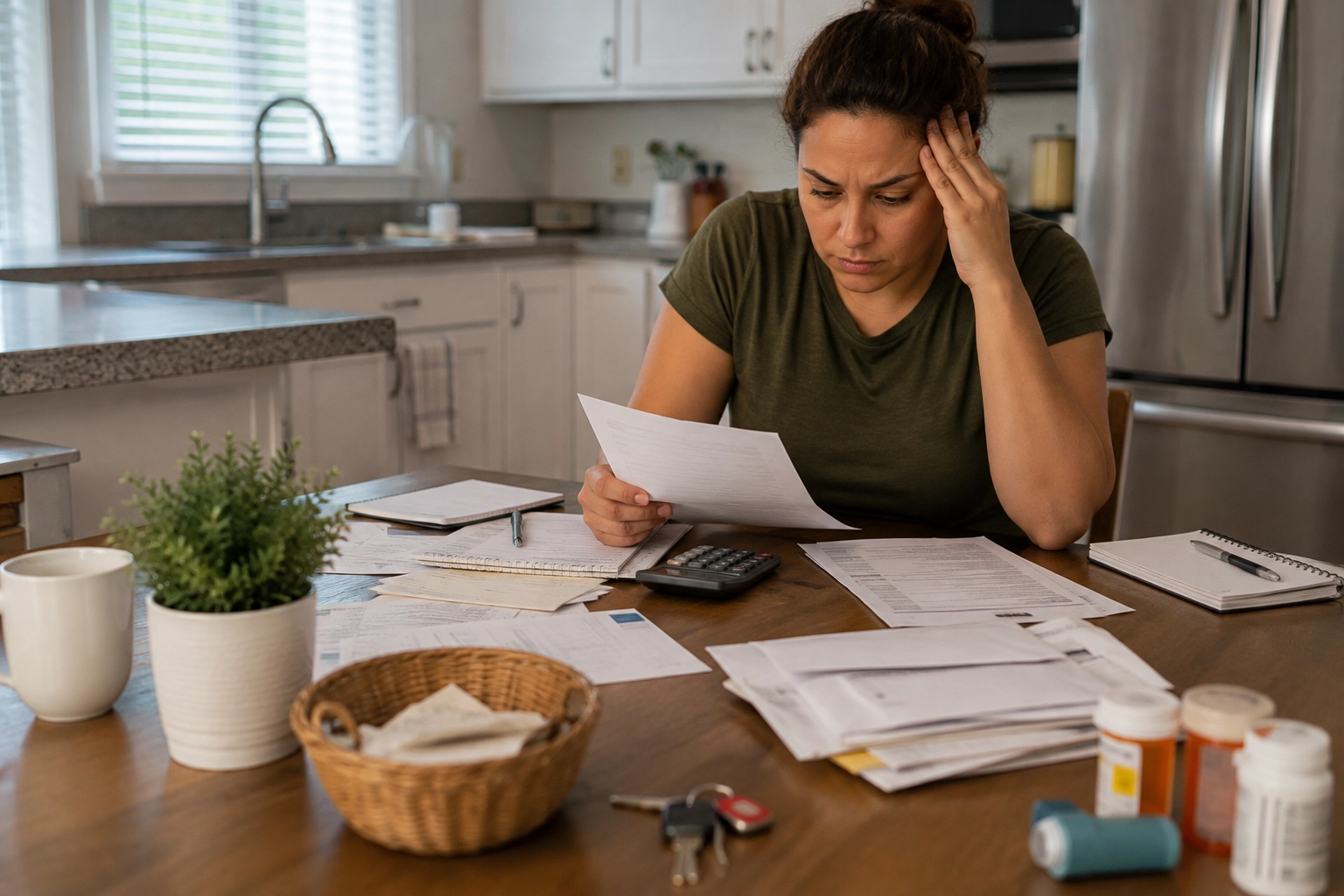
Rent, mortgage payments, temporary housing costs, and immediate household obligations.
Prescriptions, rehabilitation, physical therapy, medical equipment, and personal treatment expenses.
Groceries, electricity, water, gas, phone service, internet service, and routine household costs.
Fuel, vehicle repairs, car payments, rideshare expenses, public transit, and transportation related to treatment.
Childcare, home assistance, disability-related equipment, insurance expenses, and personal debts.
Personal funeral and burial costs associated with a pending wrongful-death claim.
Mayfair provides pre-settlement funding in 46 states. Explore your state to learn about local funding laws, typical timelines, and the types of cases we fund in your area.
Long Beach lawsuit funding covers qualifying transportation, personal injury, premises, employment, malpractice, product liability, civil rights, catastrophic-injury, and wrongful-death claims.
The table below connects each claim category with its Long Beach context.
I-710, I-405, Pacific Coast Highway, 7th Street, Long Beach Boulevard, intersections, uninsured drivers
Port drayage, container transportation, I-710 freight traffic, commercial carriers, employers, cargo operations
Motorcycle Accident Lawsuit Loans
Speeding, unsafe lane changes, turning vehicles, freeway traffic, arterial streets
Bicycle Accident Lawsuit Loans
High Injury Network streets, coastal bicycle routes, intersections, unsafe passing, dooring
Pedestrian Accident Lawsuit Loans
Downtown streets, Pacific Avenue, transit areas, PCH, crosswalks, waterfront activity
Long Beach Transit, passenger falls, boarding injuries, pedestrian collisions, contractor claims
Waterfront properties, apartments, stores, restaurants, hotels, parking structures
Animal attacks causing medical treatment, scarring, nerve injuries, or lost income
Construction Accident Lawsuit Loans
Port construction, commercial projects, contractors, equipment failures, falls, third-party workplace claims
Workplace injury lawsuit loans
Qualifying third-party civil claims involving freight, warehouses, industrial operations, contractors
Medical malpractice lawsuit loans
Hospital negligence, diagnostic errors, surgery, medication errors, negligent treatment
Retaliation, discrimination, harassment, wrongful termination, wage disputes
Product liability lawsuit loans
Defective vehicles, industrial equipment, medical devices, machinery, drugs, consumer products
Police-brutality lawsuit loans
Excessive force, unlawful detention, wrongful arrest, other compensable civil-rights claims
Wrongful-death lawsuit loans
Fatal vehicle crashes, port incidents, malpractice, unsafe property, defective products
Port of Long Beach and I-710 lawsuit claims often involve commercial vehicles, freight companies, employers, contractors, cargo operations, industrial property, and several potential insurance policies.
I-710 is a major north-south freeway connecting Long Beach with central Los Angeles and serves as the principal goods-movement route between the Ports of Long Beach and Los Angeles and inland freight rail yards. The corridor carries heavy truck traffic associated with port freight.
A port or I-710 injury review examines different entities depending on the event.
Truck collision: Driver, motor carrier, employer, cargo owner, loading contractor, maintenance company, and applicable commercial insurance.
Oversize or overweight cargo incident: Vehicle operator, carrier, permit compliance, loading operation, route selection, and cargo securement. Caltrans issues transportation permits for oversize and overweight loads using Route 710 in the Port of Long Beach.
Terminal or warehouse injury: Property operator, outside contractor, machinery manufacturer, maintenance provider, and third-party employer.
Container transportation claim: Tractor, trailer, intermodal container, cargo handling, loading practices, and commercial coverage become part of the liability review. California maintains separate sea-container permit rules for designated Port of Long Beach routes.
A direct employee claim often begins in workers’ compensation. A separate third-party civil claim creates the potential recovery reviewed for lawsuit funding.
Long Beach pedestrian, bicycle, and motorcycle claims carry substantial local injury relevance because these 3 travel modes account for 14% of recorded collisions but 65% of traffic deaths and serious injuries in the City’s Safe Streets data.
Funding review for vulnerable-road-user claims focuses on the following evidence:
Vehicle speed: Long Beach identifies driving too fast for conditions as the most frequent motorist or motorcyclist cause associated with collisions in its Safe Streets data.
Right of way: Crosswalk position, bicycle movement, turning traffic, lane markings, traffic signals, and driver conduct affect liability.
Injury severity: Pedestrians, cyclists, and motorcycle riders lack the physical protection of an enclosed passenger vehicle, increasing the potential for fractures, brain injuries, spinal injuries, surgeries, rehabilitation, and lost earnings.
Street design: High Injury Network status, intersection design, bicycle facilities, lighting, and roadway configuration provide factual context without proving liability by themselves.
Long Beach reduced speed limits on 111 street segments covering 92 miles, including portions of Long Beach Boulevard, 7th Street, Cherry Avenue, Orange Avenue, Willow Street, Carson Street, and other corridors identified through its safety program.
Pacific Avenue ranks as Long Beach’s 4th most dangerous corridor for pedestrians and bicyclists under the City’s current Pacific Avenue corridor project documentation.
The identified corridor extends between Pacific Coast Highway and Wardlow Road and forms part of Long Beach’s High Injury Network.
The current project addresses pedestrian, bicycle, transit, and motor-vehicle safety along approximately 2 miles of Pacific Avenue.
A Pacific Avenue collision does not establish negligence solely from the corridor ranking. A qualifying lawsuit still requires evidence connecting the responsible person or entity to the injury.
Yes, qualifying Metro A Line and Long Beach Transit injury claims receive lawsuit-funding review when liability, damages, attorney representation, and expected compensation support the claim.
The Metro A Line connects Los Angeles with Downtown Long Beach. Downtown’s First Street Transit Gallery brings together Metro A Line service, Long Beach Transit buses, pedestrians, bicycles, and neighborhood transportation.
Transit-related claims include:
A claim against a public transportation entity also involves California government-claim procedures.
Yes, qualifying Long Beach Airport-area claims involving vehicles, rideshare transportation, shuttles, buses, pedestrians, contractors, and property conditions receive lawsuit-funding review.
Long Beach Airport connects with Long Beach Transit routes 102, 104, 111, and 405, plus taxis, rideshare providers, shuttles, vans, limousines, and paratransit services. Wardlow Station on the Metro A Line provides the nearest rail connection.
Airport-area lawsuit contexts include:
Rideshare collisions: Driver status, platform insurance, passenger status, and vehicle negligence.
Shuttle and bus accidents: Driver conduct, passenger injuries, employer liability, vehicle maintenance, and applicable insurance.
Parking and pedestrian injuries: Property conditions, vehicle movement, lighting, walkways, and responsible property operators.
Contractor accidents: Construction companies, maintenance providers, vendors, and other third parties.
California comparative fault reduces the expected recovery according to the percentage of responsibility assigned to the Long Beach plaintiff, which also reduces the case value supporting lawsuit funding.
An example involving $300,000 in damages and 20% plaintiff fault leaves $240,000 before attorney fees, liens, litigation expenses, and funding repayment.
Mayfair Legal Funding evaluates the reduced expected recovery rather than the original damages figure when shared fault affects the case.
California minimum auto liability coverage provides the starting insurance pool in some Long Beach vehicle claims.
The table below shows the current private-passenger minimums.
| California Auto Coverage | Minimum |
| Injury or death to 1 person | $30,000 |
| Injury or death to 2 or more people | $60,000 |
| Property damage | $15,000 |
California DMV confirms the $30,000/$60,000/$15,000 liability limits.
Long Beach claims involving port trucks, employer-owned vehicles, rideshare drivers, commercial buses, excess policies, uninsured motorist coverage, underinsured motorist coverage, or defendant assets present different recovery pools.
Yes, same-day Long Beach lawsuit loans are available when Mayfair Legal Funding receives sufficient claim information, completes the attorney-assisted review, approves funding, and finalizes the agreement in time for same-day distribution.
Approved funding is distributed within 24 hours.
Fast processing depends on complete attorney contact information, accurate case details, disclosure of prior advances, current insurance information, and completed agreement documents.
Learn more about same-day settlement loans.
A successful Long Beach claim repays the advance from legal proceeds; a funded claim with no financial recovery creates no ordinary repayment obligation.
A successful claim follows 5 stages:
The plaintiff does not make monthly installment payments from wages or a personal bank account during the pending case.
California requires the attorney acknowledgement to confirm the distribution process.
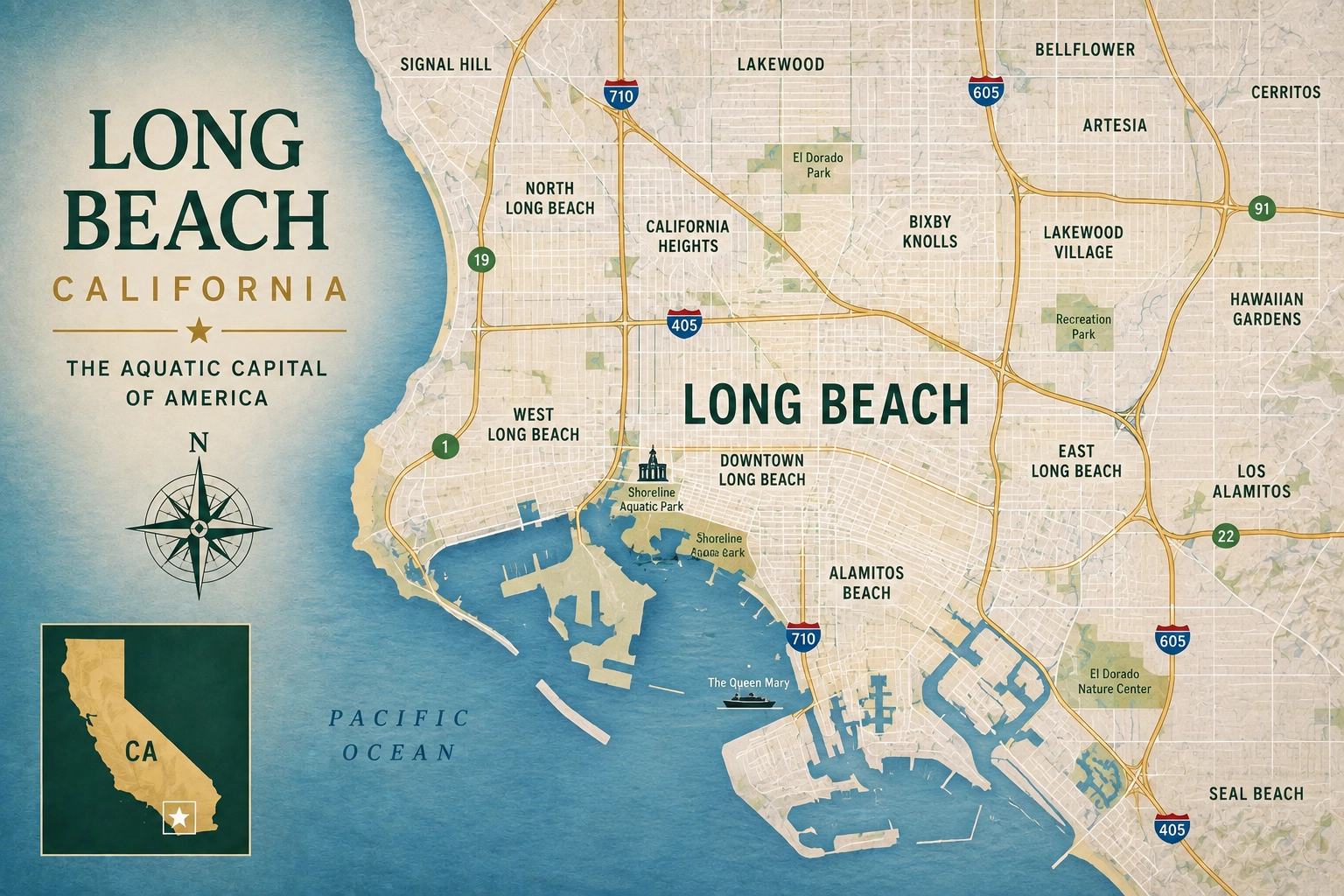
Yes, Long Beach lawsuit loans are available near plaintiffs in Downtown Long Beach, the waterfront, East Village, Alamitos Beach, Retro Row, Willmore, and surrounding central neighborhoods.
Downtown claim contexts include Metro A Line incidents, Long Beach Transit injuries, pedestrian collisions, bicycle crashes, rideshare accidents, restaurant injuries, hotel claims, waterfront property accidents, construction injuries, and government-entity claims.
The First Street Transit Gallery functions as a Downtown connection point for Metro A Line trains, Long Beach Transit buses, pedestrians, bicycles, and neighborhood transportation.
Downtown plaintiffs complete the Mayfair application and attorney-assisted review without visiting a physical funding office.
Yes, Long Beach lawsuit loans are available near plaintiffs in Belmont Shore, Belmont Heights, Naples, Alamitos Bay, Bixby Knolls, California Heights, Los Altos, El Dorado Park, and surrounding Long Beach communities.
Belmont Shore and Alamitos Bay present coastal pedestrian, bicycle, rideshare, retail, restaurant, recreation, and property-liability claim contexts.
North Long Beach and Bixby Knolls present different roadway conditions involving Long Beach Boulevard, Atlantic Avenue, Orange Avenue, Cherry Avenue, neighborhood traffic, commercial properties, and transit routes.
Long Beach operates neighborhood micro-transit service between Downtown and Alamitos Bay, including Belmont Shore service areas, adding another local transportation context for central and coastal neighborhoods.
Funding approval depends on the legal claim rather than the neighborhood or ZIP code.
Long Beach lawsuit-loan rates range from 2.5% to 5% per month in most cases, and California requires the agreement to disclose the complete repayment structure.
The table below combines Mayfair pricing terms with California consumer protections.
$500–$2,000,000
2.5%–5% in most cases
Not required
Not required
None during the pending claim
Required
Funded amount, one-time charges, maximum repayment, repayment schedule
5 business days after the funding date
Prohibited
Limited to 36 months
Funding company receives no authority over settlement timing or amount
Predetermined by time intervals rather than a percentage of final recovery
Required
Prohibited
Written consumer consent required before attorney disclosure
California’s Consumer Legal Funding Act appears in Business and Professions Code §§6250–6256 and took effect on January 1, 2026.
California filing deadlines differ according to the Long Beach claim type, defendant, and discovery facts.
The table below consolidates the main deadline rules.
2 years from the injury
2 years from the death
3 years from the damage
4 years from the breach
2 years from the breach
Earlier of 1 year after discovery or 3 years after injury, subject to exceptions
At least 90 days before filing
Administrative claim within 6 months
Lawsuit within 6 months after mailed denial
Deadline begins under the rule applicable to the date the injury or problem was discovered or reasonably should have been discovered
California Courts identifies the 2-year personal injury period, 3-year property-damage period, 4-year written-contract period, and 2-year oral-contract period.
Medical malpractice uses the earlier of 1 year after discovery or 3 years after injury, subject to statutory exceptions, and requires at least 90 days of pre-suit notice.
Personal injury and personal-property claims against government agencies require an administrative claim within 6 months. A mailed rejection starts a separate 6-month lawsuit period.
Delayed discovery does not create an automatic extra 1-year filing period for every injury identified later. The applicable deadline depends on the claim and discovery facts.
A Long Beach plaintiff applies by submitting the pending legal claim, requested funding amount, and retained attorney information to Mayfair Legal Funding.
Mayfair Legal Funding coordinates the claim review with the attorney, verifies the supporting information, evaluates expected net compensation, presents the written agreement, and distributes approved funding within 24 hours.
Mayfair Legal Funding provides lawsuit loans across California, including major metropolitan areas, suburban communities, inland cities, and coastal locations.
Mayfair funds plaintiffs in all 58 California counties. Pick a region to see some of the towns we serve.
Mayfair Legal Funding, LLC provides non-recourse cash advances structured as purchases of contingent interests in potential claim proceeds. References to “lawsuit loans,” “settlement loans,” or “pre-settlement loans” describe the service for marketing purposes. Mayfair Legal Funding does not provide conventional lending services. This page provides general information and does not provide legal, financial, or tax advice.